


A digital advertising budget for 2027 can start with a figure you already know: how many additional customers your business can serve. Work back to the cost you can afford for each one. This gives you a plan you can adjust as prices and demand change, without relying on a forecast of next year’s click costs.
Calculate an affordable acquisition cost
Start with the contribution from a new customer after variable costs. Decide how much of that contribution can fund acquisition while leaving enough to cover overheads and your desired profit. If repeat purchases matter, use observed retention and a payback period your cash flow can support. A possible future renewal should carry less weight than a paid first order.
Build three scenarios with the same objective
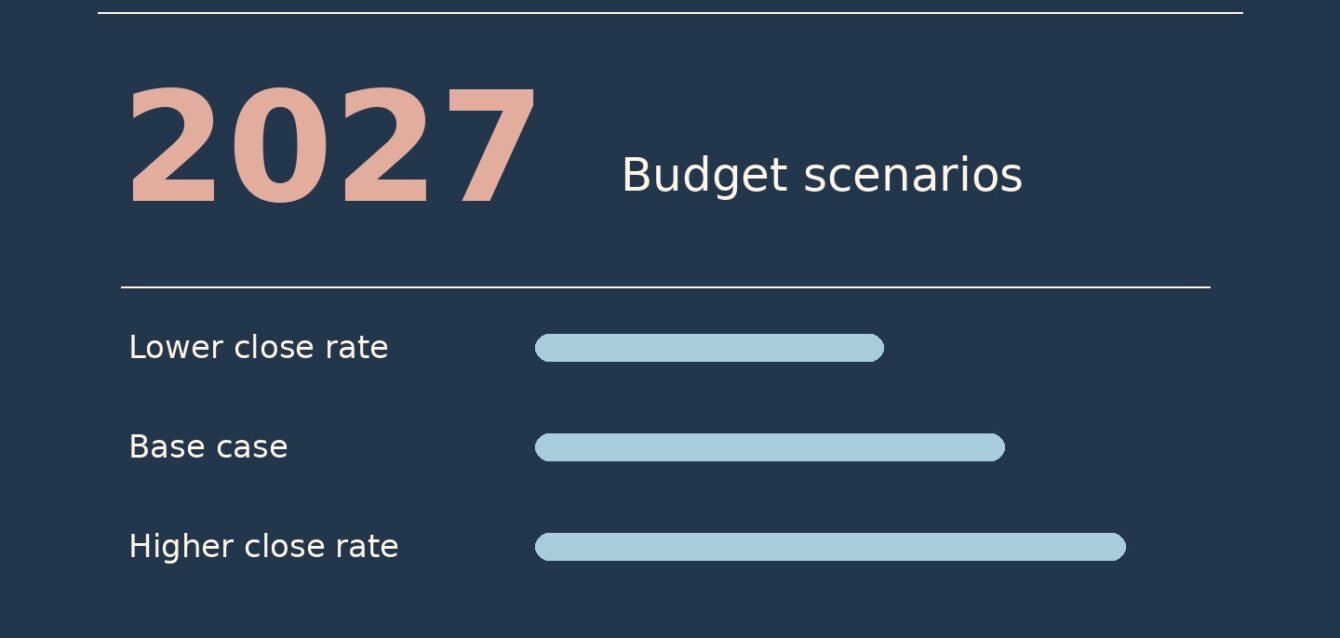
Suppose a service business wants 12 new customers per month and can spend €100 in media per acquired customer. The base media envelope is €1,200. If 25% of qualified enquiries close, the business needs 48 qualified enquiries and can spend €25 on each. If the close rate falls to 15%, it needs 80 and can afford €15 each. At 40%, it needs 30 and can afford €40. These are illustrative scenarios. They show how much sales performance changes the buying brief even when the budget stays the same.
Give every cost a place
Keep media spend, production, agency or team time, landing-page work and measurement visible as separate lines. The €100 target in the example covers media alone. If the target must include fees and production, deduct those costs before setting a platform budget. Put promotions on the calendar beside stock, booking capacity and the team’s ability to handle enquiries.
Decide when to move money
Give each test a question and an amount you can justify losing for the learning. For example, can a new search landing page produce qualified enquiries inside the base-case limit? Review mature groups of leads, remaining capacity and contribution before increasing spend. Set a date to revisit assumptions after the first quarter. That makes the 2027 plan a working budget rather than a percentage inherited from last year.